- WE BUY USED OFFICE FURNITURE!
- support@phoenixfurnitureny.com
- (516) 513-4247
Your Old Technology Is Either an Asset or a Liability. We Determine Which — Then Handle Both.

Corporate electronics accumulate fast. Aging workstations, retired peripherals, obsolete networking gear, end-of-life mobile devices — without a structured recycling program, these assets pile up in storage rooms, creating compliance risk and wasted square footage.
We provide scheduled, on-demand, and recurring e-waste pickup services for enterprise clients across all facility sizes. Our team handles everything from a single floor refresh to a full campus-wide technology rollover.
What's Included:
On-site asset tagging and inventory documentation before anything is removed
Secure, GPS-tracked transport in our own fleet — no third-party hand-offs
Environmentally responsible processing with a 100% landfill-free guarantee
Certificate of Recycling issued for every pickup for your compliance and ESG records
Flexible scheduling: one-time, recurring quarterly, or on-call as refreshes occur
What We Accept:
Desktops, laptops, monitors, servers, networking equipment (switches, routers, firewalls), printers, mobile devices, tablets, UPS systems, peripherals, cables and accessories, and more. If it has a plug or a battery, we handle it.
Why It Matters:
Electronics contain hazardous materials — lead, cadmium, mercury, and lithium — that are regulated under federal and state law. Simply handing devices to an uncertified vendor creates downstream liability. Our ISO-aligned processes ensure your organization is fully protected from the point of pickup through final disposition.
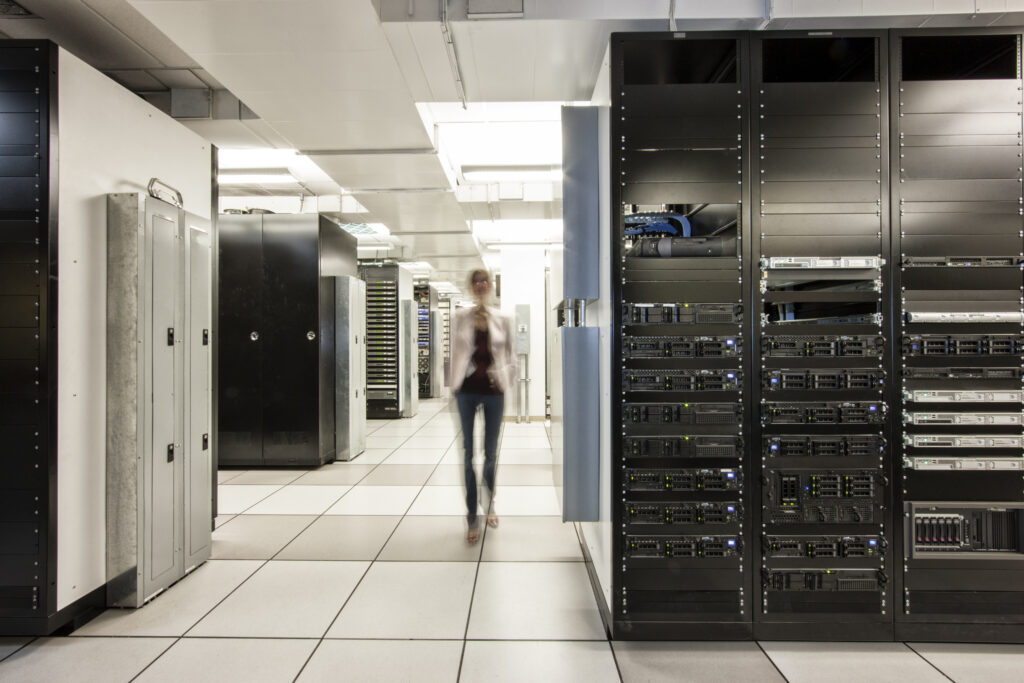
A data center decommission is one of the most complex IT projects an enterprise undertakes. Between coordinating logistics, maintaining uptime, managing data security obligations, and adhering to environmental regulations, the margin for error is razor thin.
We specialize in complete data center decommissioning projects — from early-stage planning through final asset disposition — so your team can stay focused on your core infrastructure transition, not on the logistics of getting rid of the old one.
Our Decommissioning Process:
Phase 1 — Assessment & Planning
Before we touch a single piece of hardware, we conduct a thorough on-site assessment. We document all assets, map the floor plan, identify data-bearing devices requiring certified destruction, and build a detailed project timeline that minimizes disruption to your operations.
Phase 2 — Certified Data Destruction
All data-bearing media — hard drives, SSDs, tape storage, embedded storage — is processed in accordance with NIST 800-88 sanitization standards. You receive a serialized Certificate of Destruction for every device, providing the audit-ready documentation your legal, compliance, and security teams require.
Phase 3 — Physical Decommissioning & Removal
Our trained crews handle the full physical decommission: rack teardown, cable removal and labeling, hardware de-installation, and careful preparation for transport. We work around your schedule, including nights and weekends, to minimize operational impact.
Phase 4 — Asset Disposition
Assets are evaluated for remarketing, refurbishment, or recycling. Recoverable value is returned to you. What cannot be remarketed is recycled through our ISO-compliant process — zero landfill, full documentation.
Phase 5 — Final Reporting
You receive a complete final report: full asset inventory, data destruction certificates, environmental disposal certificates, and weight/material recovery data for your ESG and sustainability reporting.
Most enterprises dramatically underestimate what their end-of-life IT equipment is worth on the secondary market. Servers that are two to three generations old, enterprise networking gear, and even older workstations all carry residual market value — value that typically goes unrealized because organizations focus on disposal, not recovery.
We evaluate every asset that comes through our program for remarketing potential before any recycling decision is made. Our goal is to maximize the financial return on your retired technology, reducing — and in many cases eliminating — the net cost of your decommissioning project.
How it Works:
Asset Evaluation: All equipment is inspected, tested, and graded against current secondary market valuations. We provide a transparent breakdown of estimated value before any disposition decision is made.
Refurbishment & Resale: Qualified assets are cleaned, tested, and brought to resale condition. We manage the remarketing process through our established secondary market channels, ensuring you receive competitive, current-market pricing.
Transparent Returns: You receive a detailed reconciliation report showing every asset, its disposition path (reused, resold, or recycled), and the financial return generated. No black boxes, no vague "credit" — just clear accounting.
Revenue Offset: Value recovery can be applied directly to offset the cost of your decommissioning project, making technology refresh cycles significantly more economical.

Every year, enterprises retire millions of devices — servers, workstations, laptops, networking equipment, storage arrays, and more. Most organizations treat this as a disposal problem. It isn’t. It’s a security problem, a compliance problem, and an environmental responsibility problem — all at the same time.
Improperly decommissioned hardware has resulted in data breaches, regulatory fines, and corporate reputations permanently damaged by e-waste that ended up in the wrong place. The risks are real, and they don’t end the moment a device leaves your building.
We exist to eliminate those risks entirely — and to recover value from assets that organizations too often write off completely.
Every organization that upgrades its technology faces the same moment: a growing inventory of retired hardware that carries sensitive data, regulatory obligations, and — if handled correctly — real financial value.
Most companies treat this as a disposal problem. The smart ones treat it as a risk management and value recovery decision.
The numbers tell the story: the average cost of a data breach in the U.S. reached $9.36 million in 2024. Improper e-waste disposal can trigger fines of up to $37,000 per day under certain federal regulations. And yet we routinely find enterprises sitting on $10,000–$15,000 worth of remarketable hardware collecting dust in storage closets while they pay to dispose of it.
We close all three gaps: security, compliance, and value — under one roof, with one accountable team, and complete documentation from day one.
No hold music. No forms that go nowhere. Pick how you'd like us to reach you — we'll handle the rest.